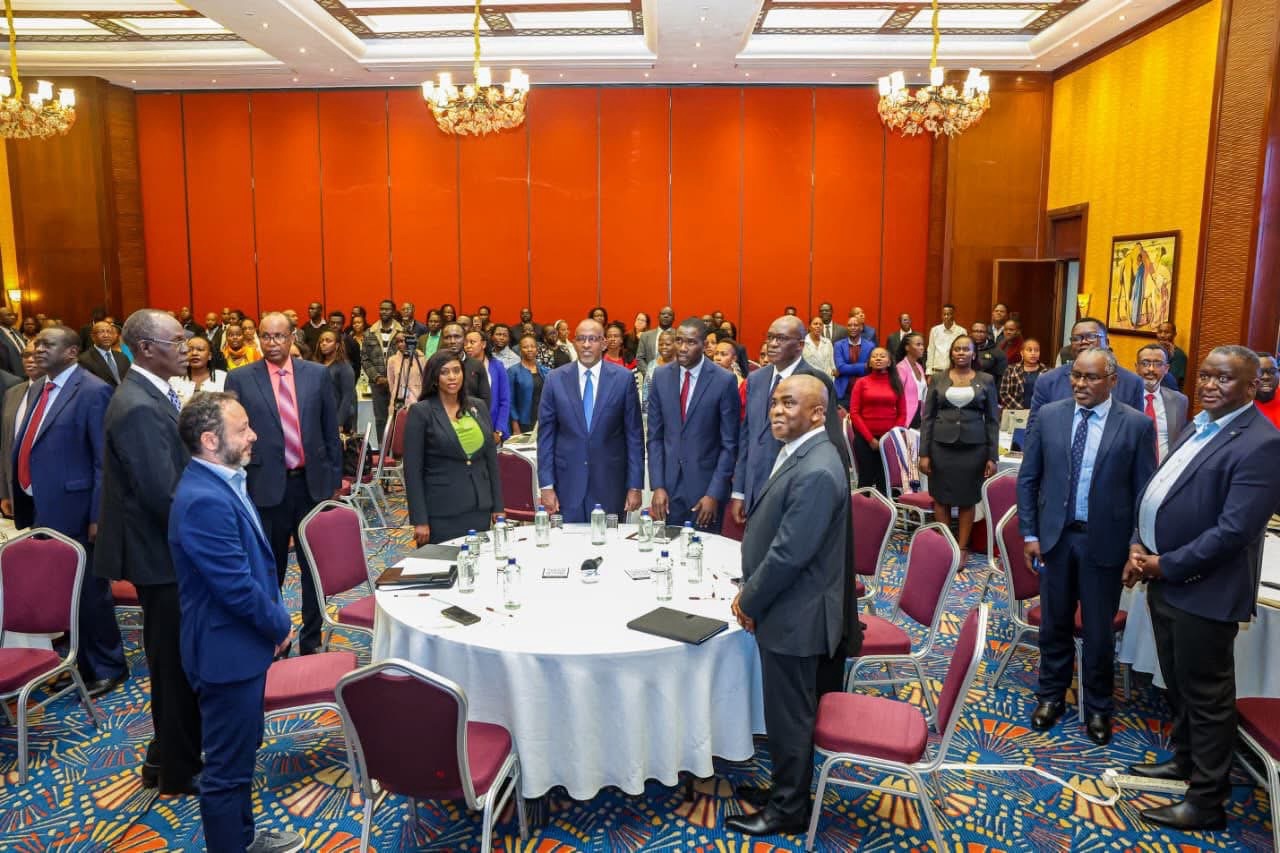


Health Cabinet Secretary Hon. Aden Duale has unveiled three groundbreaking reports aimed at transforming Kenya’s healthcare system and propelling the country closer to achieving Universal Health Coverage (UHC). The reports — Quality of Care and Human Resources for Health Assessment Report, Service Availability and Readiness Assessment (SARA), and Reproductive, Maternal, Newborn, Child and Adolescent Health and Nutrition (RMNCAH+N) Investment Case — were launched under the theme “Unveiling Key Findings and Recommendations to Strengthen Healthcare Delivery and Quality of Care in Kenya.” These comprehensive studies provide crucial evidence to inform policy direction, guide strategic investments, and enhance health outcomes across the nation.
Addressing delegates during the event, CS Duale emphasized that access to quality healthcare is a fundamental right enshrined in Article 43 of the Kenyan Constitution. He reaffirmed the government’s dedication to building equitable and people-centered health systems aligned with the Bottom-Up Economic Transformation Agenda (BETA). “Our goal is to ensure that every Kenyan, regardless of their location or income, enjoys access to quality healthcare services,” he stated. The CS noted that improving healthcare delivery requires collective effort from all levels of government and development partners.
Among the key findings from the reports, Duale highlighted the urgent need to address the imbalance between technical and non-technical health workers, a challenge that continues to undermine efficiency in service delivery. He called for strategic human resource reforms to ensure optimal staffing and improved workforce motivation. Duale also raised concern over rising maternal mortality rates, pledging to make maternal health a top priority for the Ministry through a comprehensive, life-course approach. To achieve this, he announced the introduction of a digital maternity dashboard that will facilitate real-time data tracking and enhance monitoring of care quality across all counties.
The CS underscored that these reports complement existing frameworks such as the Kenya Health Sector Strategic Plan (KHSSP 2023–2027) and the Primary Healthcare Strategic Framework (2021–2030). He said the Ministry’s focus remains on strengthening quality assurance mechanisms, promoting accountability, and building resilient health systems that can withstand shocks such as pandemics. “Quality must remain the backbone of our health system if we are to achieve lasting impact,” Duale remarked.
Duale further commended Kenya’s development partners, including the Bill & Melinda Gates Foundation, Global Fund, United Nations Population Fund (UNFPA), UNICEF, and the World Health Organization (WHO), for their continued technical and financial support to the country’s health programs. He called on all stakeholders to unite in the spirit of Sustainable Development Goal 17 (SDG 17): Partnerships for the Goals, noting that multi-sectoral collaboration remains essential in elevating healthcare standards and ensuring no one is left behind.
The launch ceremony was attended by senior officials from the Ministry of Health and key development partners, including Principal Secretaries Dr. Ouma Oluga (Medical Services) and Ms. Mary Muthoni (Public Health and Professional Standards), Director-General for Health Dr. Patrick Amoth, KEMSA CEO Dr. Waqo Ejersa, and Head of RMNCAH Dr. Edward Serem. Also present were UNICEF’s Luigi D’Aquino, World Bank’s Dr. Peter Okwero, Gates Foundation’s Dr. Wangari Ng’ang’a, WHO’s Dr. Adiele Onyenze, and Mandera Senator Mariam Omar. The event marked a major step toward strengthening Kenya’s healthcare delivery, with all participants pledging to work together to make quality healthcare a reality for every Kenyan.